
Latest Blogs
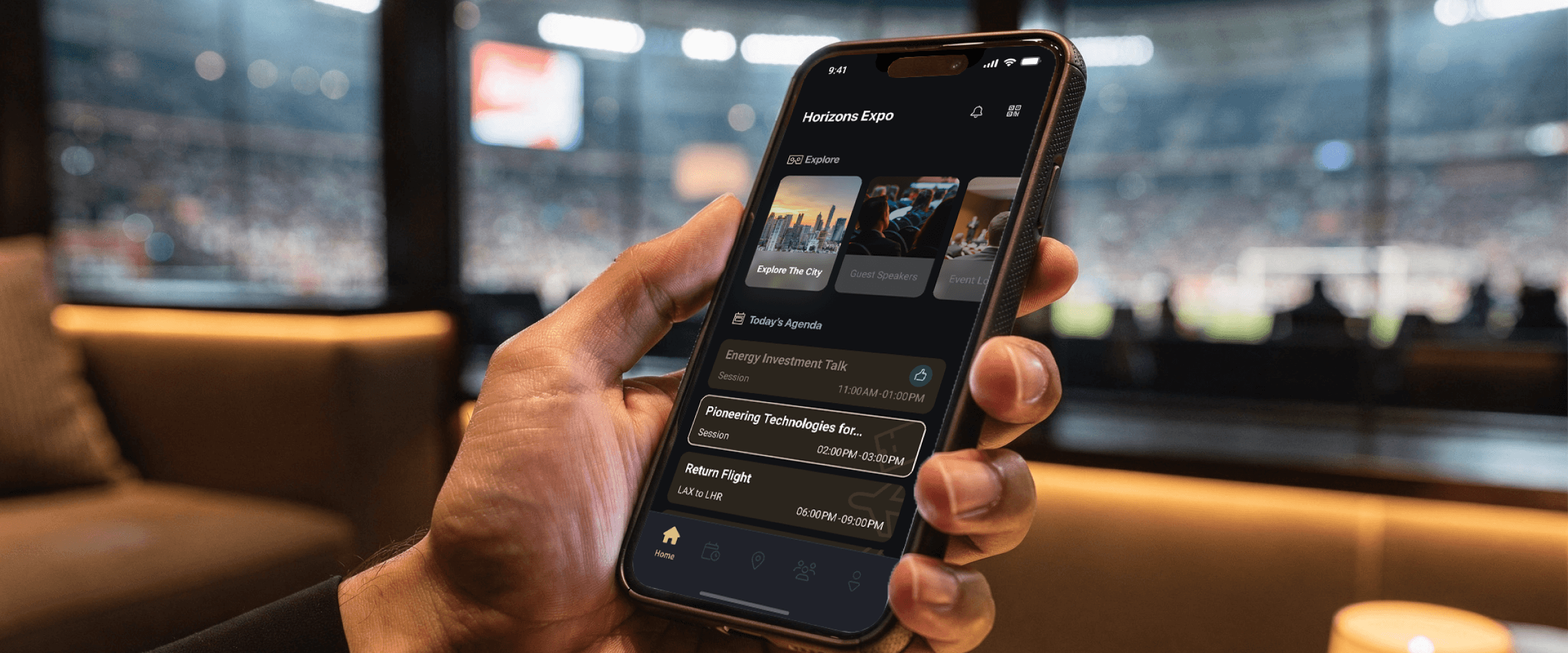

Discover how AI-powered matchmaking is reshaping event networking, from smarter attendee discovery to more intentional introductions, and why interactive formats like Blink Roulette create stronger, more engaging connection journeys.
Article Highlights:
Why event networking needs a new model
Why traditional networking still underperforms
What AI-powered matchmaking actually improves
Why relevance matters more than volume
Blink Roulette and the role of guided discovery
Designing for both serendipity and strategy
The operational value for organizers
The future of networking at premium events
Better connections, by design
After years of treating networking as a secondary event feature, organizers are under growing pressure to deliver something more measurable, more relevant, and more valuable. Attendees no longer judge networking by how many people were present. They judge it by whether they met the right people. At the same time, expectations have risen around personalization, ease, and interaction quality. Static attendee lists, generic messaging, and open-ended networking breaks are no longer enough for events that want to create real business value or premium guest experiences. That is where AI-powered matchmaking becomes important. It helps organizers move networking away from chance and toward intentional design.
Let’s dive in.
Why event networking needs a new model
Networking has always been one of the strongest promises of live events. But in practice, it is often one of the least structured parts of the attendee experience.
Guests may arrive with clear goals: meeting potential partners, investors, clients, collaborators, media contacts, or peers. Yet many events still leave those outcomes to timing, confidence, or coincidence.
This creates a gap between attendance and value. The right people may be in the room, but that does not mean they will find each other.
Implication: At high-value events, networking can no longer be treated as passive. It needs to be designed with the same level of intention as content, hospitality, and operations.
Why traditional networking still underperforms
Traditional networking still underperforms because most event tools provide access without enough direction. Features like attendee directories, open messaging, networking breaks, manual introductions, and basic “people you may know” recommendations can support connection, but they often introduce more friction than value. Large attendee lists feel overwhelming, cold outreach feels awkward, and manual introductions do not scale, which means many of the most valuable opportunities stay hidden unless attendees already know exactly who to approach. As a result, the same pattern repeats: visible attendees receive most of the attention, quieter attendees are overlooked, guests fall back on existing contacts, and networking becomes random instead of meaningful. The issue is rarely a lack of attendees. It is a lack of intelligent connection design.
What AI-powered matchmaking actually improves
AI-powered matchmaking should go beyond suggesting a few names based on broad interests and instead focus on improving the quality of discovery. A strong matchmaking layer draws on structured signals such as attendee role, industry or organization type, profile interests, event objectives, session engagement, availability, audience segment, and mutual relevance to surface meaningful connections. The intention is not to automate relationships, but to make relevant introductions easier to find and easier to act on. This becomes especially important in executive, VIP, and premium environments, where time is limited and each interaction carries greater weight. AI-powered matchmaking is most effective when it aligns with real event goals, rather than functioning as a novelty feature.
Why relevance matters more than volume
Relevance matters more than volume because networking has long been measured by scale rather than actual value. More attendees, more scans, more messages, and more meetings may signal activity, but they do not guarantee meaningful outcomes. The strongest event connections usually come from relevance: the right conversation at the right moment, the right introduction tied to a specific goal, and the right context that makes engagement feel natural instead of forced. This is where modern matchmaking changes the model. Rather than leaving attendees to navigate a crowd on their own, the experience can guide them toward the people who are most likely to matter. That leads to a stronger networking journey, where attendees discover relevant people, understand why those people matter, express interest with less friction, create a mutual starting point, and continue the relationship beyond the first interaction. Better networking is not about showing more profiles. It is about surfacing the ones most worth meeting.
Blink Roulette and the role of guided discovery
This is where Blink Roulette adds a distinctive layer to the networking experience.
Blink Roulette is a gamified networking feature designed to help attendees discover and connect with others through randomized spins. But its value is not randomness for its own sake. Its real strength is that it makes discovery feel lighter, more engaging, and more natural.
Instead of forcing attendees into a static browse-and-filter experience, Roulette introduces motion and curiosity into the process. It gives people a softer entry point into networking, especially when they may feel hesitant, overloaded, or unsure where to begin.
In that sense, Blink Roulette is not just a game mechanic. It is a guided discovery experience.
It helps:
Reduce hesitation around the first interaction
Broaden visibility across the attendee base
Create more equal opportunities for discovery
Make networking feel active rather than passive
Balance spontaneity with a smarter matchmaking model
Implication: Blink Roulette works especially well as part of a broader AI-powered networking strategy, where relevance is supported by a more human and energizing discovery format.
Designing for both serendipity and strategy
One of the biggest mistakes in matchmaking design is becoming too rigid.
Not every valuable connection is obvious from a filter or a profile tag. Some of the most meaningful conversations happen across adjacent industries, complementary roles, or unexpected shared interests.
That is why great networking experiences need both:
Strategy, so attendees are not wasting time
Serendipity, so discovery stays fresh and genuinely human
Blink Roulette supports that balance. It introduces an element of surprise without making the experience feel directionless. It helps networking feel alive, while still operating inside a more intentional event framework.
Implication: The future of event networking is neither purely algorithmic nor purely random. It is curated discovery with room for surprise.
The operational value for organizers
AI-powered matchmaking is not only valuable for attendees. It also delivers stronger outcomes for organizers. A better networking model can increase engagement within the event platform, create greater perceived value from the event, support sponsors, partners, and VIP stakeholders through more relevant introductions, improve profile completion and attendee data quality, differentiate the event from standard networking formats, and generate better insight into attendee intent and connection behavior. Interactive features like Blink Roulette strengthen this even further by giving the event a more memorable networking identity. Instead of treating networking as a simple utility, it becomes a designed part of the overall event experience.
The future of networking at premium events
The next generation of event networking will not be defined by directories alone. It will be defined by how intelligently the experience supports discovery, timing, and relevance.
As premium and high-stakes events continue to evolve, attendees will expect more than access to a room full of people. They will expect the event itself to help unlock the right conversations.
That means networking experiences must become:
More intentional than chance
More engaging than static browsing
More relevant than open access alone
More human than automation for its own sake
Implication: AI’s value in events is not replacing human chemistry. It is improving the conditions in which meaningful chemistry can happen.
Better connections, by design
The strongest event connections are rarely the result of luck alone.
They happen when the experience reduces friction, surfaces relevance, and creates moments of discovery that feel both natural and intentional. That is the promise of AI-powered matchmaking.
Not to force relationships.
Not to over-engineer networking.
But to make better connections more likely.
And with features like Blink Roulette, that journey becomes more than a list of attendees and more than a hopeful networking break. It becomes a designed experience, one that reflects the future of premium event connection.
Design smarter networking into every event experience.
Discover how Blink helps organizers create more intentional, engaging connection journeys through AI-powered matchmaking and interactive experiences like Blink Roulette.



" height="36.999998935290364px" id="U8lSvJQnz" width="76.99999479379187px"/></svg>)
" height="35.946300804560565px" id="JOXlSIPVT" width="140.9905775924913px"/></svg>)