
Latest Blogs
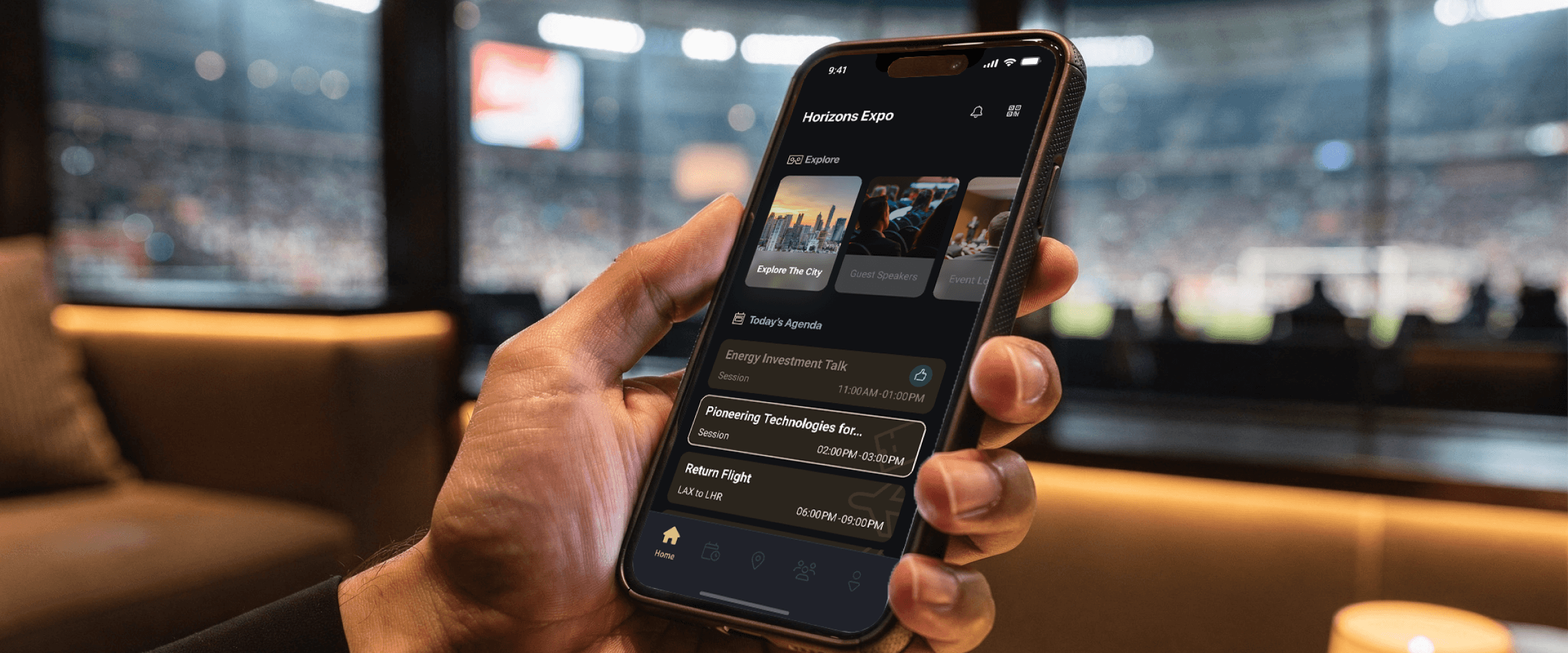



VIP event management has entered a new era. Between 2024 and 2026, expectations around high-profile experiences, whether diplomatic summits, executive forums, or invitation-only gatherings, have shifted significantly. VIP guests no longer expect only premium hospitality. They expect precision, discretion, and relevance at every stage of the journey. As reflected in the white-glove framework, the highest form of hospitality is not simply generosity, but precision. At the same time, the environments surrounding these events have become more complex, with multiple guest tiers, multi-venue journeys, real-time logistics changes, and rising expectations for seamless personalization. The problem is that many VIP experiences are still delivered through coordination rather than orchestration, and once complexity increases, coordination alone begins to fail.
The Core Problem: Why VIP Experiences Fail at Scale
On the surface, VIP events often appear polished and effortless. Behind the scenes, however, they frequently depend on spreadsheets, manual coordination, disconnected systems, and reactive decision-making. As complexity grows, the weaknesses of that model become more visible. Guest preferences, access permissions, schedules, and service notes are often scattered across different systems and teams, making it difficult to maintain a shared understanding of each guest. Communication also tends to become too generic, with VIPs, speakers, and partners receiving the same broad messaging, which weakens the sense of exclusivity and relevance. In many cases, execution depends more on internal heroics than on structured systems, and when plans shift, the response is often slow and inconsistent. At scale, excellence cannot depend on effort alone. It must depend on design.
The Better Way: From VIP Handling to Experience Orchestration
Traditional VIP management tends to treat each guest as an exception to be handled individually. A modern approach treats the entire experience as a connected system. Coordination may manage tasks, but orchestration aligns the experience as a whole. That shift is what makes it possible to create consistency across touchpoints, respond in real time, and scale personalization without creating chaos behind the scenes. Rather than relying on separate teams to manually hold the experience together, orchestration creates a unified operational model where every part of the journey moves with intent.
Stage 1: Strategy Designing for VIP Complexity
VIP events are not simply smaller events with better guests. They are more complex ecosystems that require a more deliberate strategy from the start. A modern VIP strategy begins with deep guest intelligence, including a clear understanding of guest type, role, priorities, access level, invitation tier, and personal preferences across hospitality, logistics, and communication. It also requires structured segmentation. Executives, delegates, speakers, VIPs, and VVIPs should not all move through the same experience in the same way. Segmentation allows personalization to scale in a way that remains controlled and manageable. From there, role-based experience design becomes essential, with distinct journeys, access rules, schedules, and interactions built around each audience group. Personalization should not begin onsite. By the time the guest arrives, the system should already be informed by a clear data strategy, meaningful segmentation, and thoughtful journey design.
Stage 2: Implementation Turning Strategy Into Seamless Execution
Execution is where many VIP experiences begin to break down, not because teams are unwilling to deliver, but because the structure beneath the experience is too weak to support it. Scalable VIP delivery requires a unified identity across touchpoints, so that one profile powers the experience from start to finish without requiring repeated validation or duplicated inputs. It also depends on dynamic access control, where permissions can shift according to role, tier, and invitation logic, allowing guests to move seamlessly through the event. Personalized experience flows are equally important, ensuring that agendas, communications, and networking opportunities feel tailored rather than generic. This must all be supported by real-time coordination, where updates are reflected instantly and teams remain aligned across operations. When strategy is translated into infrastructure in this way, the experience becomes smoother not because it is simpler, but because complexity is being managed intelligently.
Stage 3: Operations Delivering Precision in Motion
VIP experience is not purely digital. It is operational at its core. Guest services, hospitality, security, and logistics all need to operate from the same understanding of who the guest is, what matters to them, and what support they may need. Operational excellence depends on shared context across teams, real-time visibility into changes, and a reduced dependence on chat threads, manual follow-ups, and informal workarounds. The faster teams can access the same information and act on it in sync, the more controlled and effortless the experience becomes. Before an event begins, organizers should be able to answer a few critical questions with confidence: do all teams share the same guest data, can access permissions change in real time, are guest journeys clearly defined by role, and is there a single source of truth for operations? If the answer is no, then the experience is still relying on manual fixes rather than operational design.
Stage 4: Experience Making Complexity Feel Effortless
The true test of VIP management is not how much effort goes into it internally, but how the experience feels to the guest. Guests should not be burdened with unnecessary options, repeated explanations, or moments of uncertainty. The right information should appear at the right moment, and each interaction should feel calm, relevant, and controlled. What VIP guests should experience is effortless movement through the event, timely and useful information, recognition without repetition, and a general sense that everything has already been considered for them. That is the distinction between a managed event and an orchestrated experience. One may function, but the other feels intentional.
Stage 5: Measurement From Service to Business Impact
VIP events are no longer judged by aesthetics alone. They are increasingly evaluated through measurable indicators of effectiveness, including how quickly guests engage, how consistent the experience remains across touchpoints, and how efficiently teams operate together. That means organizers should look beyond surface-level success and measure the journey itself. The speed of guest onboarding, points of friction, team alignment, and responsiveness to change all reveal whether the experience is truly working. The more useful question is no longer simply whether the event was successful, but where the journey felt seamless, where it broke, and how quickly the organization adapted when conditions changed.
The Enterprise Lens: Scaling VIP Without Compromise
For enterprise teams, VIP event delivery requires more than strong execution. It requires strong infrastructure. Scaling premium experiences across multiple venues, guest types, and operational layers cannot depend on fragmented tools or improvised coordination. It requires architecture built for scalability, role-based access governance, real-time systems, and unified control across the entire experience. Without that foundation, consistency becomes harder to maintain and personalization becomes harder to scale.
The Playbook for VIP Event Excellence
A stronger VIP model begins with guest intelligence, not just guest lists. Teams need to understand context, preferences, and priorities before they can deliver meaningful personalization. Segmentation must come before individual tailoring, so that the experience is designed for groups in a structured way before being refined at a more personal level. A unified experience layer is also essential, connecting touchpoints through one system rather than a patchwork of tools. Real-time operations should be enabled by default, reducing delays between teams and making the organization more responsive as conditions change. Above all, the experience should be designed to feel effortless, reducing noise for the guest while increasing relevance at every stage.
Common Mistakes That Undermine VIP Experiences
Many VIP experiences fall short because they mistake luxury for decoration, over-communicate with guests, treat VIP handling as improvisation, or separate digital tools from operational execution. A premium setting may impress visually, but without relevance and coordination, the guest can still feel unseen. True luxury in this context is not excess. It is thoughtful precision.
The Bottom Line: Precision Is the New Luxury
VIP event management is evolving beyond extra attention, reactive service, and manual coordination. The new standard is precision, consistency, and orchestrated delivery at scale. As expectations continue to rise, VIP experiences will no longer be judged only against other events. They will be compared to the best of luxury hospitality, premium travel, and high-end client service. The question for enterprise teams is no longer how to manage VIP guests. It is how to design an experience that makes every VIP feel expected.




" height="36.999998935290364px" id="U8lSvJQnz" width="76.99999479379187px"/></svg>)
" height="35.946300804560565px" id="JOXlSIPVT" width="140.9905775924913px"/></svg>)