Latest Blogs


1st
Event
Technology
1st
New Event
Technology
1st
Conference
Technology
1st
Event
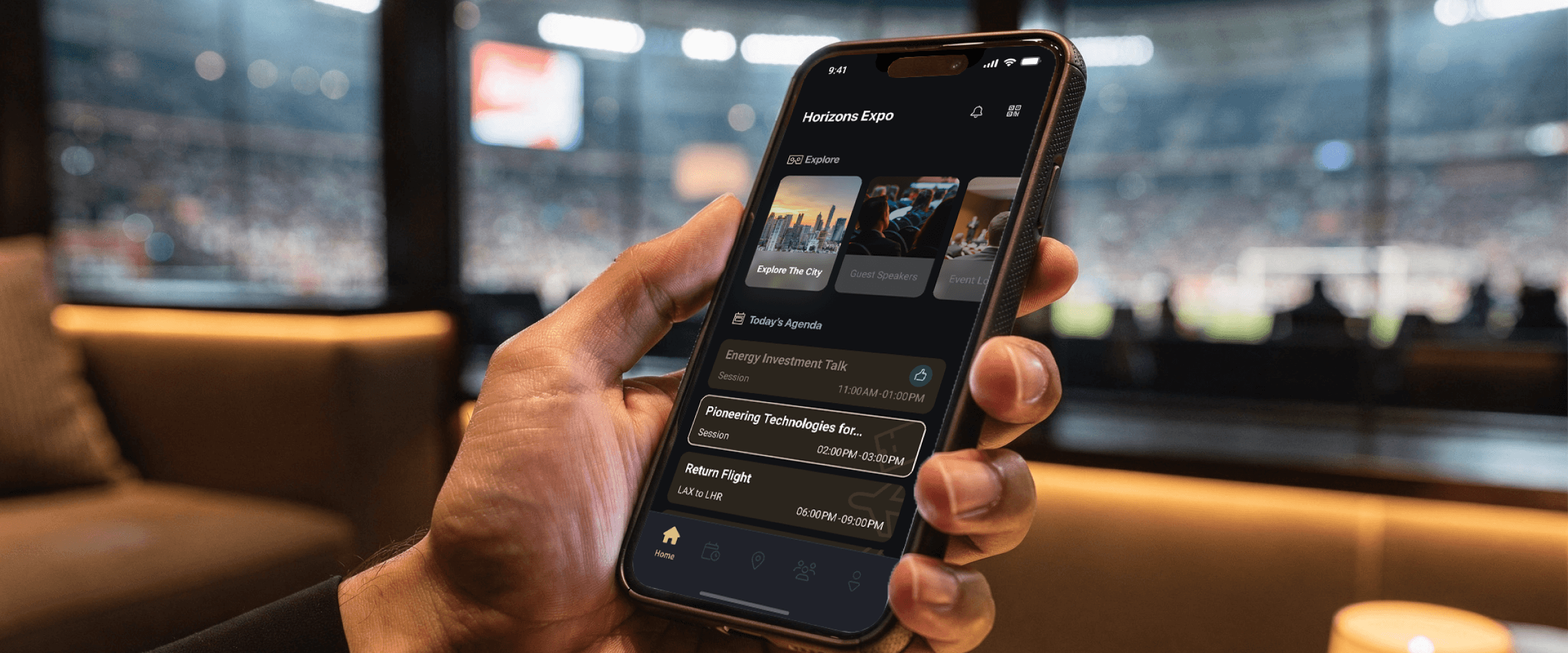
App
1st
People’s Choice
Award
2nd
Attendee Management
Technology
3rd
Event Management
Solution
Why This Matters Now
The standard for successful events has changed. Between 2024 and 2026, it is no longer enough to deliver a well-organized event with strong attendance and polished production. What matters now is how seamlessly the entire experience works across every touchpoint.
Enterprise events today are evaluated based on how connected, responsive, and personalized they feel. Attendees expect real-time updates, relevant interactions, and frictionless navigation. Organizers are expected to deliver operational precision while managing increasing complexity across venues, audiences, and logistics.
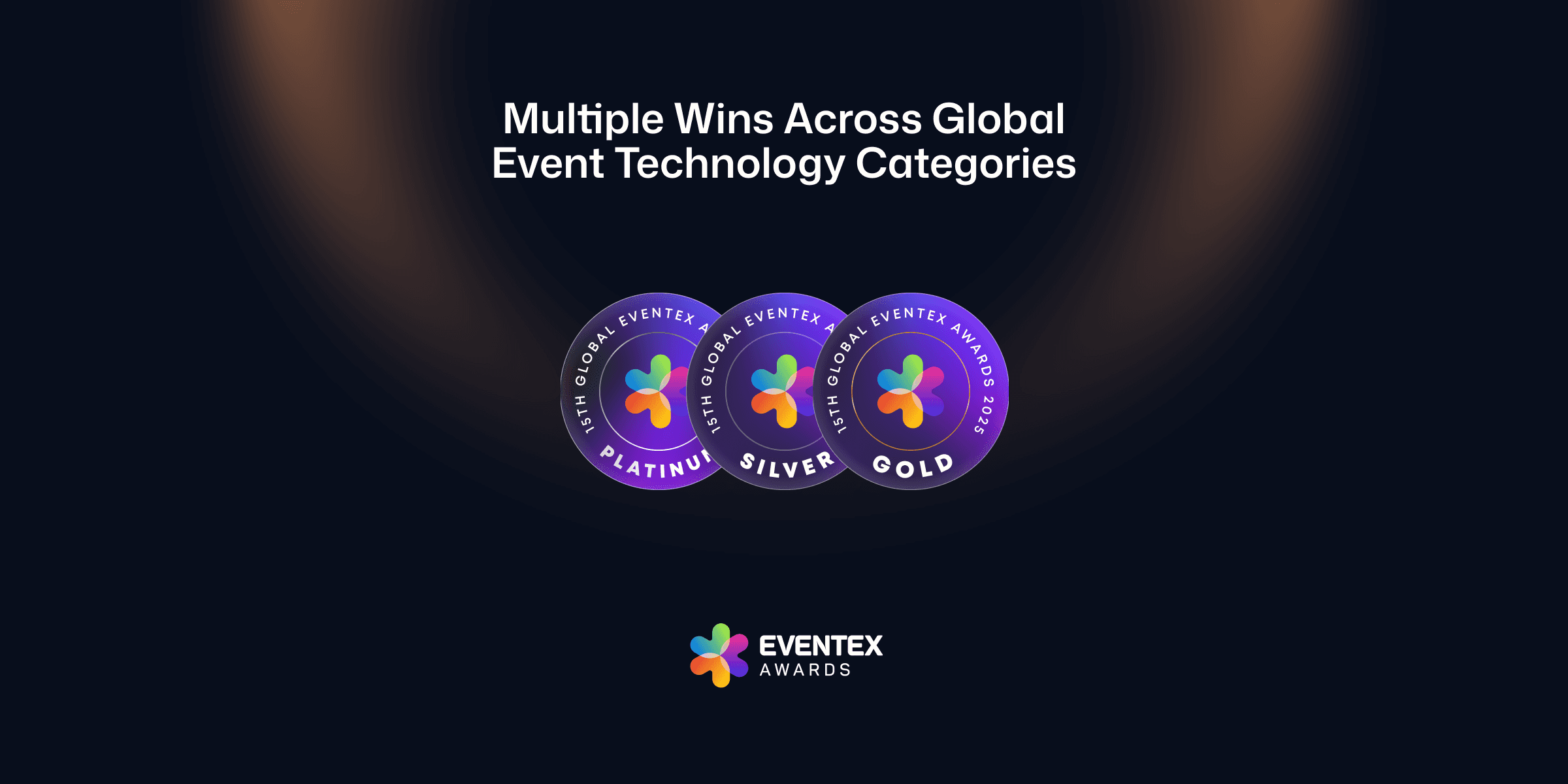
This shift is clearly reflected in industry recognition. Blink Tech Inc.’s seven Eventex awards highlight more than strong execution. They represent a new benchmark for how event technology should perform at scale.
What These 7 Awards Really Represent
Blink’s recognition spans across Event Technology, New Event Technology, Attendee Management Technology, Conference Technology, Event App, Event Management Solution, and People’s Choice Event Technology.
These categories may seem separate, but together they point to something more important. This is not recognition of individual features. It is validation of a unified system that connects every part of the event experience.
The industry is no longer rewarding isolated tools. It is rewarding platforms that bring operations, experience, and data together into one connected model.
The Shift from Tools to Systems
Traditional event technology has been built as a stack of separate tools. One system handles registration, another manages check-ins, another supports networking, and another oversees operations. While these tools can function individually, they often fail to create a consistent experience when combined.
Blink’s approach replaces this fragmented model with a unified ecosystem. The Management Dashboard, Organizer App, VIP App, and Driver App work together in real time, creating a single environment where decisions are shared instantly across the system.
This is the difference between managing tasks and orchestrating an experience.
Strategy: Designing for Control and Continuity
Award-winning execution begins with system design. Instead of treating each function separately, the experience is built as one continuous journey.
Blink’s model is structured around a unified foundation where registration, access, scheduling, networking, and logistics are all connected. This allows schedules to adapt in real time, access permissions to update instantly, and operational issues to be resolved before they affect the attendee experience.
This level of control ensures that complexity is managed behind the scenes while the guest experience remains simple and intuitive.
Implementation: Turning Complexity into Precision
The real test of any event system is how it performs under pressure. Blink has been deployed across high-stakes environments including the FIFA World Cup, the Super Bowl, and the Sportico World Summit.
These events require precise coordination across multiple layers, including access control, logistics, and real-time communication. Blink’s centralized command center allows organizers to manage registration, seating, and analytics in one place, while the Organizer App enables real-time updates, capacity monitoring, and instant communication across teams.
At the same time, the VIP App delivers personalized schedules, updates, and networking opportunities directly to attendees, while the Driver App ensures smooth transport through live tracking and dynamic scheduling.
Together, these components create a system where every part of the event is connected and responsive.
Experience: Where Technology Becomes Visible
The strongest validation of any event technology is the attendee experience. Blink’s recognition in categories such as Event App and Attendee Management Technology reflects how effectively the platform supports the guest journey.
Attendees are able to access personalized schedules, receive real-time updates, and discover relevant sessions and connections without friction. Instead of navigating complexity, they experience clarity and control.
This is where modern event technology stands apart. It is no longer just a support tool. It becomes an active part of the experience itself.
Operations: Efficiency That Scales
Operational excellence is often invisible to attendees, but it is critical to event success. Blink’s impact at Sportico World Summit demonstrates how system-driven execution can improve efficiency at scale.
The platform enabled a 25 percent reduction in staffing needs, minimized traffic bottlenecks, and reduced no-shows through automation and real-time coordination.
These outcomes are not just operational improvements. They directly influence the quality of the experience by reducing friction and ensuring consistency across the event.
Engagement: From Attendance to Value
Modern events are no longer measured by attendance alone. Engagement is defined by how effectively attendees interact with the experience.
At Sportico, Blink achieved a 90 percent app adoption rate, with attendees actively using the platform for scheduling, networking, and real-time updates.
This level of adoption reflects strong Time to Value, where users quickly recognize the platform’s relevance and integrate it into their event journey. It also indicates that the experience is intuitive enough to encourage consistent usage.
As one industry judge noted, the integration of logistics, networking, and data intelligence into a single system sets a new standard for event platforms.
The Enterprise Perspective
For enterprise teams, these awards highlight more than innovation. They demonstrate readiness for scale.
A platform capable of delivering at this level must support large, multi-venue environments while maintaining security, reliability, and performance. Blink’s infrastructure includes enterprise-grade security, GDPR compliance, and 99.99 percent uptime, ensuring confidence even in high-stakes scenarios.
This combination of scalability and reliability is what enables consistent delivery across global events.
The Playbook Behind Award-Winning Execution
The success behind these seven awards can be broken down into a clear set of principles.
Build a unified system that connects every part of the event
Enable real-time data flow to eliminate delays and inconsistencies
Design personalized journeys that adapt to each attendee
Automate core workflows to reduce manual dependency
Focus on adoption to ensure the platform delivers value
These strategies are not isolated tactics. They form the foundation of a scalable event operating model.
The Bottom Line
These seven awards reflect a broader transformation in the events industry. Success is no longer defined by how well individual components perform. It is defined by how well the entire system works together.
Great events do not fail because of weak content or poor planning. They fail when the systems behind them are disconnected.
The most successful events today are those that operate as unified ecosystems, where every interaction, update, and decision is aligned in real time.
What Comes Next
As event complexity continues to grow, the gap between fragmented tools and unified systems will only become more visible. Organizers who continue to rely on disconnected solutions will face increasing challenges in delivering consistent, high-quality experiences.
The real question for enterprise teams is whether they are building events that depend on coordination or systems that can scale them with precision.
This recognition validated Blink’s ability to unify operations, personalization, and real-time logistics in one seamless ecosystem.