|
Event Management
Event Management Is Broken. Blink Is the Fix.
Event Management Is Broken. Blink Is the Fix.
Event Management Is Broken. Blink Is the Fix.
|
Event Management
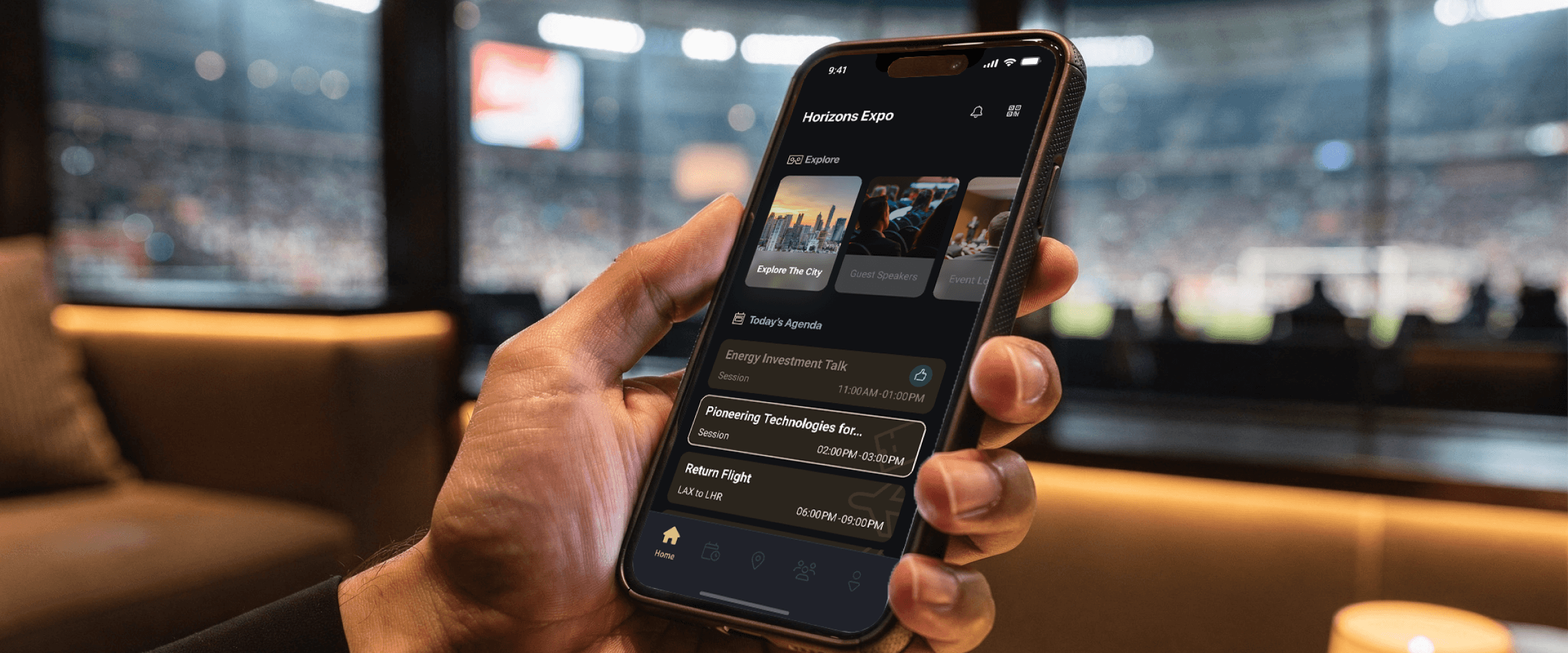
Managing an event today is not about handling tasks. It’s about managing complexity in motion.
Managing an event today is not about handling tasks. It’s about managing complexity in motion.
Latest Blogs



Behind every successful event is a network of moving parts registration, access control, schedules, attendees, staff, communication, incidents, and reporting. Each of these functions is critical on its own. But the real challenge is not managing them individually.
It’s managing how they work together.
Because events do not fail due to lack of tools.
They fail when those tools do not operate as one system.
The illusion of control in modern event management
Most event teams today rely on multiple platforms to run their operations.
One system for registration.
Another for ticketing.
Another for content and agenda.
Another for access and badging.
Another for communication.
Another for reporting.
On paper, everything looks covered.
In reality, teams spend most of their time:
syncing data across systems
verifying attendee information
resolving inconsistencies
reacting to gaps between tools
The more complex the event, the more fragile this setup becomes.
And when something breaks, it doesn’t break in isolation.
It breaks in the experience.
Event management is no longer static. It’s live.
The traditional model assumes that once an event is set up, it runs.
But modern events don’t behave that way.
They evolve in real time:
Attendees update details
Sessions shift
Access rules change
Guests move between spaces
Incidents occur
Priorities change on the ground
This requires something most event stacks are not designed for:
continuous operational visibility.
Without it, teams are always reacting after the problem appears.
What event leaders actually need to manage
Event management today is not just about logistics. It is about alignment across multiple layers of the experience.
That includes:
Identity and attendee state
Every attendee should exist as one consistent profile across registration, access, sessions, and networking. When identity fragments, everything else follows.
Access and control
Who can enter where, when, and under what conditions. This is not just security—it shapes movement, flow, and experience.
Content and schedule
Agendas are no longer static. They are dynamic systems that must reflect real-time changes across all touchpoints.
Operations and incidents
Teams need visibility into what is happening as it happens staff distribution, incidents, delays, and bottlenecks.
Communication and support
Every interaction with a guest should be informed by context, not guesswork.
Measurement and reporting
Understanding performance should not happen after the event. It should guide decisions during the event.
The problem: fragmented systems create invisible gaps
When these layers are managed across disconnected tools, teams lose something critical:
a shared operational truth.
This is where issues begin:
A guest is registered but cannot access a space
A badge does not reflect updated permissions
A session change is not reflected everywhere
A flagged attendee is not visible across teams
An incident is logged but not acted on quickly
Data exists, but cannot be trusted in real time
Each of these moments may seem small. But together, they define whether an event feels controlled or chaotic.
The shift: from managing tools to orchestrating the event
The next evolution in event management is not adding more tools.
It is replacing fragmentation with orchestration.
Orchestration means:
one connected system
one source of truth
one operational view across teams
real-time alignment between all event layers
This is where Blink ExperienceOS operates differently.
How Blink ExperienceOS redefines event management
Blink is not built as a collection of features. It is built as an experience orchestration system.
That means the core functions of event management are not separated—they are connected.
Unified attendee identity
Attendee data flows across registration, access, sessions, and networking. No duplication. No mismatches.
Access and badge intelligence
Credential logic reflects real-time attendee status, ensuring accurate entry and movement across the event.
Live operations visibility
From staff distribution to incident tracking and system updates, teams can monitor the event as it unfolds.
Integrated content and sessions
Schedule changes and session dynamics are reflected consistently across the experience.
Real-time analytics and metrics
Dashboards provide immediate insight into performance attendance, engagement, incidents, and operational flow.
Support and communication context
Teams can respond faster because they have the full picture of the attendee and the situation.
What changes when everything is connected
When event management moves from fragmented tools to orchestration, the difference is immediate.
Stakeholders | Impact with Orchestrated Event Management (Blink ExperienceOS) |
|---|---|
Teams | Spend less time reconciling information and more time acting. Work faster with real-time visibility, reduce operational risk, and manage complexity with greater control. |
Attendees | Experience smoother entry and access, receive more relevant interactions, face fewer delays and inconsistencies, and feel the event is well-managed even if they don’t see what’s behind it. |
Leadership | Gain clearer insight into performance, understand what is working in real time, and make better decisions during the event, not just after it ends. |
Event management is becoming an operating system problem
As events scale in complexity, the challenge is no longer about execution alone; it is about infrastructure.
They run on systems that:
Stay aligned under pressure
Adapt in real time
Reflect one consistent reality across teams
The future is not about managing more tools. It is about managing the event as a connected system. Because attendees experience one event not the tools behind it.
Blink ExperienceOS is built for that reality where event management is not a set of tasks, but a continuously orchestrated experience.
Behind every successful event is a network of moving parts registration, access control, schedules, attendees, staff, communication, incidents, and reporting. Each of these functions is critical on its own. But the real challenge is not managing them individually.
It’s managing how they work together.
Because events do not fail due to lack of tools.
They fail when those tools do not operate as one system.
The illusion of control in modern event management
Most event teams today rely on multiple platforms to run their operations.
One system for registration.
Another for ticketing.
Another for content and agenda.
Another for access and badging.
Another for communication.
Another for reporting.
On paper, everything looks covered.
In reality, teams spend most of their time:
syncing data across systems
verifying attendee information
resolving inconsistencies
reacting to gaps between tools
The more complex the event, the more fragile this setup becomes.
And when something breaks, it doesn’t break in isolation.
It breaks in the experience.
Event management is no longer static. It’s live.
The traditional model assumes that once an event is set up, it runs.
But modern events don’t behave that way.
They evolve in real time:
Attendees update details
Sessions shift
Access rules change
Guests move between spaces
Incidents occur
Priorities change on the ground
This requires something most event stacks are not designed for:
continuous operational visibility.
Without it, teams are always reacting after the problem appears.
What event leaders actually need to manage
Event management today is not just about logistics. It is about alignment across multiple layers of the experience.
That includes:
Identity and attendee state
Every attendee should exist as one consistent profile across registration, access, sessions, and networking. When identity fragments, everything else follows.
Access and control
Who can enter where, when, and under what conditions. This is not just security—it shapes movement, flow, and experience.
Content and schedule
Agendas are no longer static. They are dynamic systems that must reflect real-time changes across all touchpoints.
Operations and incidents
Teams need visibility into what is happening as it happens staff distribution, incidents, delays, and bottlenecks.
Communication and support
Every interaction with a guest should be informed by context, not guesswork.
Measurement and reporting
Understanding performance should not happen after the event. It should guide decisions during the event.
The problem: fragmented systems create invisible gaps
When these layers are managed across disconnected tools, teams lose something critical:
a shared operational truth.
This is where issues begin:
A guest is registered but cannot access a space
A badge does not reflect updated permissions
A session change is not reflected everywhere
A flagged attendee is not visible across teams
An incident is logged but not acted on quickly
Data exists, but cannot be trusted in real time
Each of these moments may seem small. But together, they define whether an event feels controlled or chaotic.
The shift: from managing tools to orchestrating the event
The next evolution in event management is not adding more tools.
It is replacing fragmentation with orchestration.
Orchestration means:
one connected system
one source of truth
one operational view across teams
real-time alignment between all event layers
This is where Blink ExperienceOS operates differently.
How Blink ExperienceOS redefines event management
Blink is not built as a collection of features. It is built as an experience orchestration system.
That means the core functions of event management are not separated—they are connected.
Unified attendee identity
Attendee data flows across registration, access, sessions, and networking. No duplication. No mismatches.
Access and badge intelligence
Credential logic reflects real-time attendee status, ensuring accurate entry and movement across the event.
Live operations visibility
From staff distribution to incident tracking and system updates, teams can monitor the event as it unfolds.
Integrated content and sessions
Schedule changes and session dynamics are reflected consistently across the experience.
Real-time analytics and metrics
Dashboards provide immediate insight into performance attendance, engagement, incidents, and operational flow.
Support and communication context
Teams can respond faster because they have the full picture of the attendee and the situation.
What changes when everything is connected
When event management moves from fragmented tools to orchestration, the difference is immediate.
Stakeholders | Impact with Orchestrated Event Management (Blink ExperienceOS) |
|---|---|
Teams | Spend less time reconciling information and more time acting. Work faster with real-time visibility, reduce operational risk, and manage complexity with greater control. |
Attendees | Experience smoother entry and access, receive more relevant interactions, face fewer delays and inconsistencies, and feel the event is well-managed even if they don’t see what’s behind it. |
Leadership | Gain clearer insight into performance, understand what is working in real time, and make better decisions during the event, not just after it ends. |
Event management is becoming an operating system problem
As events scale in complexity, the challenge is no longer about execution alone; it is about infrastructure.
They run on systems that:
Stay aligned under pressure
Adapt in real time
Reflect one consistent reality across teams
The future is not about managing more tools. It is about managing the event as a connected system. Because attendees experience one event not the tools behind it.
Blink ExperienceOS is built for that reality where event management is not a set of tasks, but a continuously orchestrated experience.

Experience what's
next with Blink
Experience what's
next with Blink
Experience what's
next with Blink
Join our community and stay ahead with exclusive news and updates.
Experience what's
next with Blink
Join our community and stay ahead with exclusive news and updates.
Orchestrate Limitless
Experiences, Effortlessly.
It’s one thing to talk about Blink…another to see it in action.
Orchestrate Limitless
Experiences, Effortlessly.
It’s one thing to talk about Blink…another to see it in action.
Orchestrate Limitless
Experiences, Effortlessly.
It’s one thing to talk about Blink…another to see it in action.
Orchestrate Limitless
Experiences, Effortlessly.
It’s one thing to talk about Blink
another to see it in action.
Trusted by
" height="36.999998935290364px" id="U8lSvJQnz" width="76.99999479379187px"/></svg>)
" height="35.946300804560565px" id="JOXlSIPVT" width="140.9905775924913px"/></svg>)


Trusted by
Trusted by
Get an AI summary of Blink

Exclusive Partnership



Get an AI summary of Blink
Exclusive Partnership
Get an AI summary of Blink
Exclusive Partnership
Get an AI summary of Blink
Exclusive Partnership