Latest Blogs



Event access used to be simple. A guest registered, received a badge, passed through a checkpoint, and moved on. That model worked when events were smaller, simpler, and easier to control from a single point of entry.
That is no longer the reality.
Today’s enterprise events are far more dynamic. They span multiple venues, layered audience types, timed sessions, private spaces, live schedule changes, and more personalized attendee journeys. In that environment, access is no longer just about admission. It shapes how smoothly guests move, how efficiently teams operate, and whether the overall experience feels seamless or fragmented.
This is why event access is being rethought. The strongest events are moving away from isolated checkpoints and toward a more connected model, where one identity can support many moments across the full event journey.
Why event access needs a rethink
Traditional access systems were built to control entry. That is still important, but it is no longer enough. Access today also needs to support movement, personalization, operational visibility, and experience continuity at scale.
When access is managed through disconnected systems, the problems are easy to recognize. Registration may sit in one platform, badge logic in another, venue permissions somewhere else, and operational updates shared manually between teams. The guest may not see that structure directly, but they feel its effects through repeated validation, inconsistent permissions, unnecessary waiting, or being rerouted at the wrong moment.
What looks like a small operational issue behind the scenes often feels like friction to the attendee. And at high-profile or premium events, friction has an outsized impact on how the experience is perceived. That is why access should no longer be treated as a venue control layer alone. It has become part of experience design itself.
The problem with the legacy model
The legacy model treats access as a sequence of separate decisions. Who can enter here. Who can sit there. Who can move into this space at this time. Each checkpoint operates almost like its own event.
The weakness of that approach is not only complexity. It is repetition. The guest journey is continuous, but the access logic behind it is often fragmented. That creates duplicated steps, heavier staff dependency, and less flexibility when plans change in real time.
For enterprise teams, this becomes difficult to sustain. The more venues, guest categories, session formats, and operational teams involved, the more brittle a fragmented access model becomes. It may still function, but it stops feeling elegant. A better model makes access responsive to identity, not separate from it.
What one identity actually means
One identity is not just a badge or QR code. It is a connected source of truth that informs how the event responds to each person across multiple touchpoints. It can connect registration status, guest role, access tier, schedule relevance, seating, and staff handling into one continuous logic.
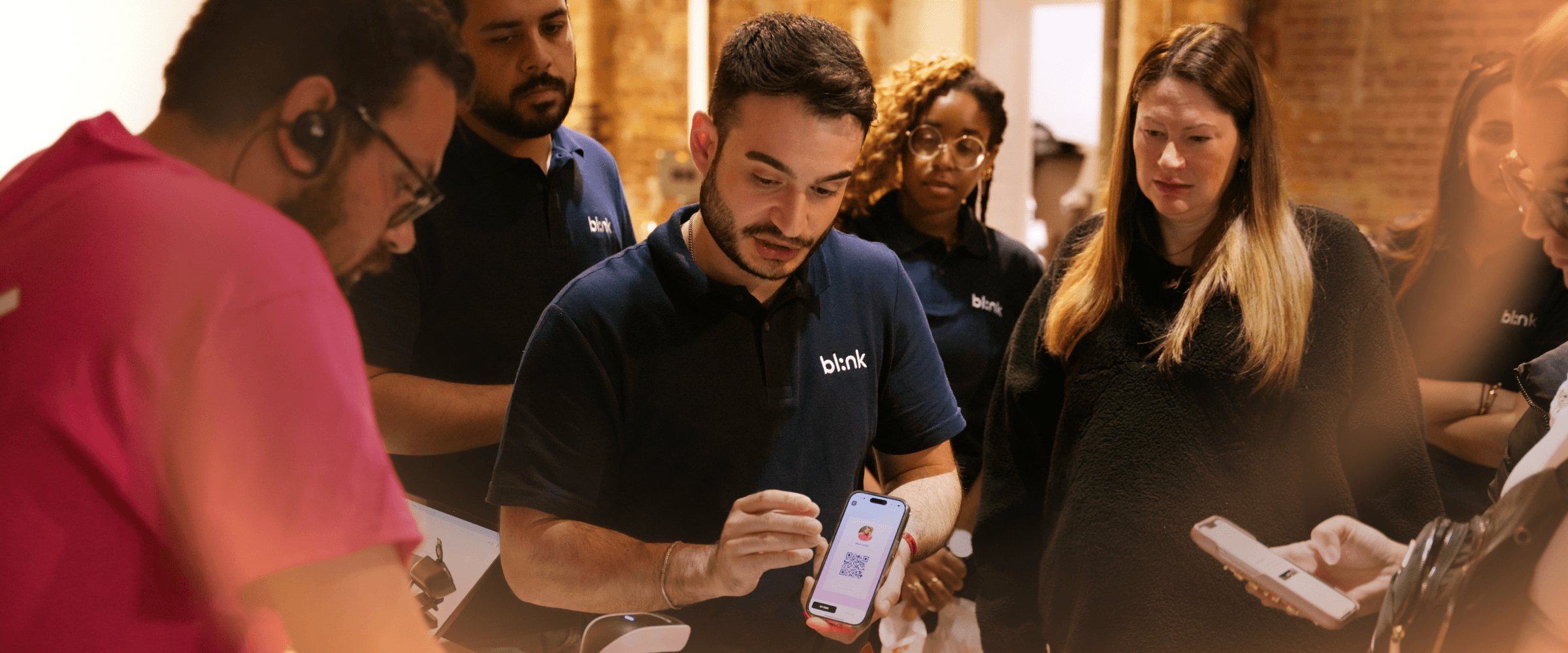
This is where modern event platforms begin to create real value. Blink, for example, approaches access as part of a unified operating model. Its Management Dashboard supports registration, badge allocation, seat assignments, and real-time analytics, while the Organizer App helps staff manage attendee check-ins and session capacities in real time. Rather than treating permissions and movement as disconnected tasks, this creates a more connected access framework that supports the broader event experience.
That kind of model becomes even more important in high-stakes environments. Blink’s deployments in complex settings, including the FIFA World Cup 2022, show how access needs to support far more than entry alone in large-scale and VIP event ecosystems.
Why access is really an experience layer
The strongest access systems do not call attention to themselves. They simply make the event feel easier.
The guest moves without confusion. The right permissions already exist. The right teams have the right context. The right updates reach the right people at the right time. That kind of flow does not happen by accident. It is the result of treating access as a connected experience layer rather than a single operational checkpoint.
This matters even more in premium and multi-layered event environments. VIP guests, speakers, staff, sponsors, and attendees do not all move through the event in the same way. Some need differentiated venue permissions. Some need fast-track movement. Some need route changes based on schedule or capacity. A modern access model should account for those differences without making the event feel heavier to manage.
From access control to access orchestration
The old question was simple: who can enter here?
The better question is: how should this person move through the event?
That shift changes everything. It moves access from restriction to orchestration. Instead of treating each checkpoint separately, organizers can think about access as a connected layer across arrival, entry, seating, sessions, private spaces, and live changes.
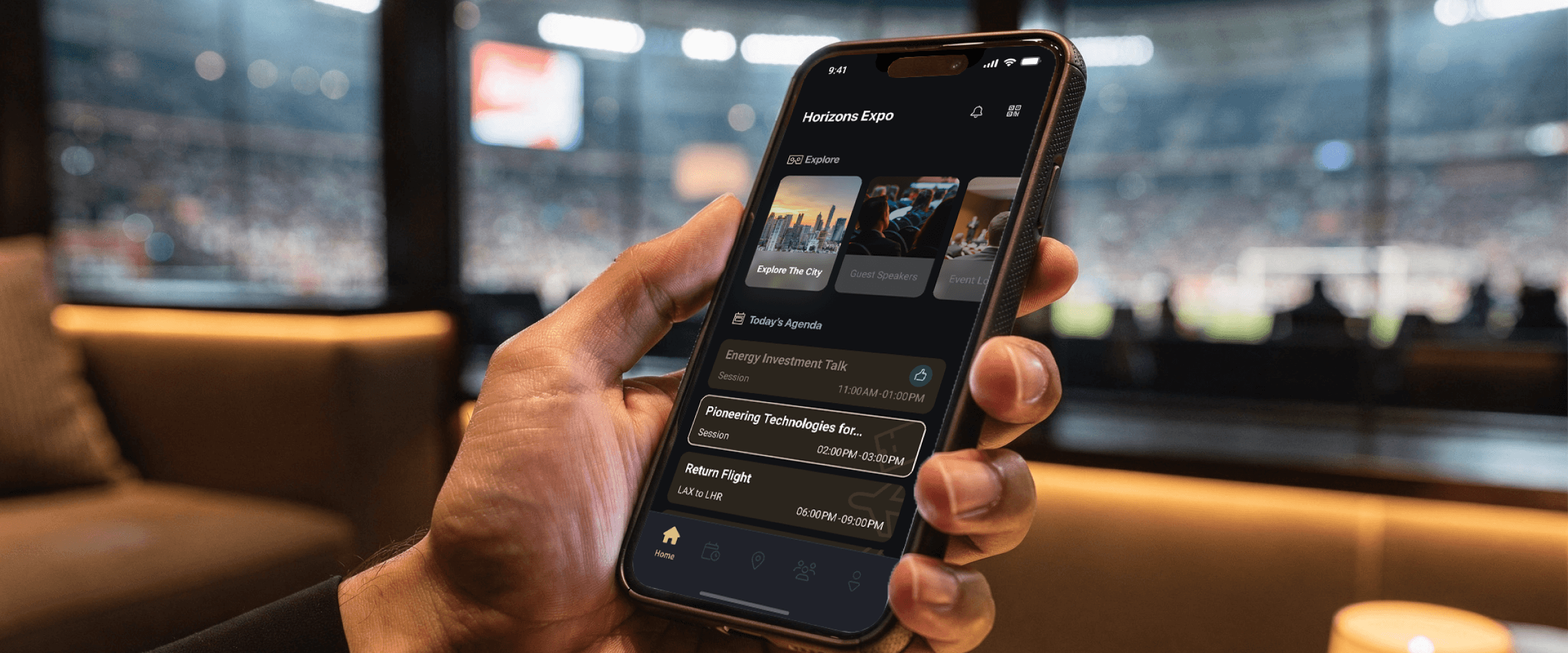
This is where integrated event systems create a clear edge. In Blink’s broader ecosystem, the Management Dashboard, Organizer App, and VIP App work together to support registration, live check-ins, real-time updates, and personalized attendee journeys. That creates a more unified environment where identity does not just confirm who the guest is. It helps the event respond accordingly.
For event teams, this has practical value. It reduces fragmentation. It improves responsiveness. And it makes the experience feel far more intentional.
What this looks like in practice
A modern access strategy is usually built on four principles. The first is identity continuity. A guest should not feel like a new person at every touchpoint. One identity should carry across access, seating, schedules, and event pathways. The second is role-based logic. Access should reflect who the attendee is and how they are meant to move through the experience. VIP guests, speakers, staff, and general attendees should not be governed by the same static rules.
The third is real-time adaptability. Access should not freeze once the event begins. If schedules shift, rooms reach capacity, or plans change, the system should support quick adjustments without creating confusion. The fourth is operational visibility. Teams work better when they share the same live context. Access becomes easier to manage when staff, organizers, and support teams can see changes in real time rather than relying on manual updates. These principles are not abstract. They directly influence speed, clarity, and confidence throughout the event.
The enterprise case for unified access
For enterprise teams, rethinking access is not just about convenience. It is about scale, control, and trust.
Large events often involve multiple venues, secure spaces, differentiated guest categories, executive handling, timed entries, and constant operational change. In that context, access becomes a strategic layer. It affects staffing, guest perception, security, efficiency, and resilience across the entire event.
This is why infrastructure matters. Blink’s Eventex recognition highlights that the platform was built for complex, high-stakes events and supports enterprise-grade security, GDPR compliance, and the highest uptime. Those capabilities matter because a unified identity approach only works when the platform behind it is strong enough to support scale.
Access also connects to measurable outcomes. Faster movement reduces friction. Better role-based logic improves the attendee journey. Real-time visibility reduces reliance on manual troubleshooting. And if the system is intuitive enough to be used consistently, Time to Value improves as well. At Sportico 2024, Blink recorded a 90 percent app adoption rate, showing that attendees were actively relying on the platform for real-time updates and scheduling.
The playbook: 5 ways to rethink event access
For teams looking to modernize event access, the framework is practical.
1. Start with one source of guest truth
Access becomes inconsistent when identity data lives in too many places. Centralization is the foundation.
2. Design access by role, not by default
Different audiences need different pathways. Build around how people actually move through the event.
3. Treat access as part of the journey
It should connect to schedules, seating, notifications, and staff workflows, not sit outside them.
4. Enable live operational response
Access systems should support real-time updates when plans change.
5. Reduce guest effort at every moment
The best access experience is the one the attendee barely notices because it simply works.
Suggested breakout elements
To make this article more skimmable in a published format, two visual callouts would work well.
Pro Tip
If access depends on repeated validation, separate tools, and manual updates between teams, it is not scaling with the event. It is slowing it down.
Checklist
Before the next event, ask: Is identity unified across touchpoints? Are permissions role-based? Can staff see changes in real time? Does access support the attendee journey, not just the venue door?
The bottom line
Event access should no longer be treated as a standalone control point. In modern enterprise events, it influences how the experience feels, how operations stay aligned, and how complexity is managed without being visible to attendees.
That is why the strongest model is no longer one badge, one checkpoint, one moment. It is one identity supporting many moments across the full event journey. For public-facing event strategy, that is the real shift. The most successful events are not just secure or well organized. They are designed so that movement feels natural, permissions feel invisible, and every touchpoint works as part of a connected whole.
What comes next
As event environments continue to grow in complexity, access will become an even more important part of experience design. The teams that continue relying on fragmented checkpoints will face more friction, more operational workarounds, and less flexibility under pressure.
The next step for event leaders is to look at access across the full journey, from registration and check-ins to seating, capacity, schedules, staff visibility, and attendee movement.
Because the real goal is not simply to control entry. It is to create an event where identity travels with the guest, and every moment that follows feels connected.




" height="36.999998935290364px" id="U8lSvJQnz" width="76.99999479379187px"/></svg>)
" height="35.946300804560565px" id="JOXlSIPVT" width="140.9905775924913px"/></svg>)